
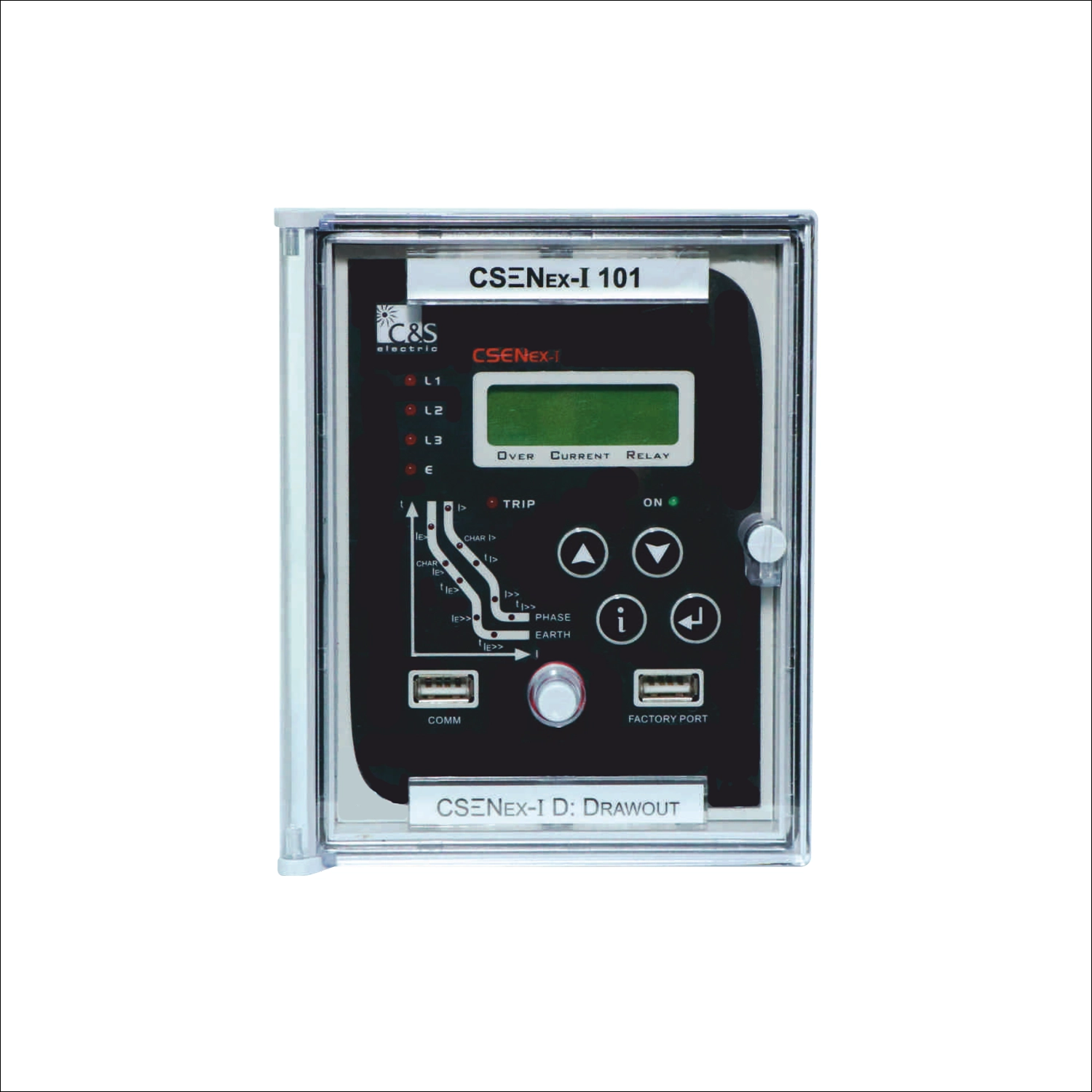
Numerical Non-Directional Current Protection Relay : CSENEX-I 100/101
FEATURES
- Multi-function Protection for Distribution
- 1A/5A Rated CT (Site selectable) *
- Over current protection
- 50/60Hz Nominal Frequency (Site selectable)
- Draw-out Relay with Self CT shorting modular design
- User configurable 2 Digital Input / 4 Digital Output
- 10 Fault & 16 Event records with date and time stamp
- IEC-103 / MODBUS communication protocol *
- Interactive HMI with USB Plug & Play support
- Common configuration Software-CSE LIVELINK
CSENEX Series offers a compact Multi-functional Over-current protection solution for Feeder, Generator, Motor & Transformer segment.
CSENEX-I Family of protective relays are numeric relays that provide multi-protection and monitoring with a reliable and fast protection solution in a single unit.
CSENEX-I series relays are an advanced feeder protection solution that has fast, sensitive and secure protection for feeder internal & external faults.
CSENEX-I offers a range of model-based features to accommodate users across a wide range.
- The CSENEX-I 101 relays have a simple design and are relatively inexpensive, making them an ideal solution for electrical protection.
- When an overcurrent occurs, CSENEX-I 203 instantly disconnect power, preventing equipment damage and reducing fire risks
- CSENEX-I 101 relays can be used in a wide range of applications, from protecting motors and transformers to safeguarding transmission lines and generators.
- C&S make relays that have a proven track record of reliability and can be precisely set to suit specific system requirements, ensuring the right protection for different scenarios.
- C&S relays provide fast tripping to clear faults quickly and to minimise damage in specific applications, such as instantaneous overcurrent relays.
- C&S Relays can work with other protective devices to ensure selective tripping, isolating only the faulty section of the circuit and minimising disruption to the rest of the system.
- Load monitoring can monitor current levels to detect potential overloads before they become a serious problem.