Few parts of electrical infrastructure are as important but as often disregarded as low voltage (LV) switchgear.
Low Voltage (LV) switchgear is essential for managing energy in any building, whether it’s a factory or a hospital.
Consider it the ultimate electrical safety guard and traffic cop. Its work is to ensure that electricity flows where it should and to immediately cut off the supply in the event of a malfunction.
Low Voltage Switchgear: What is it?
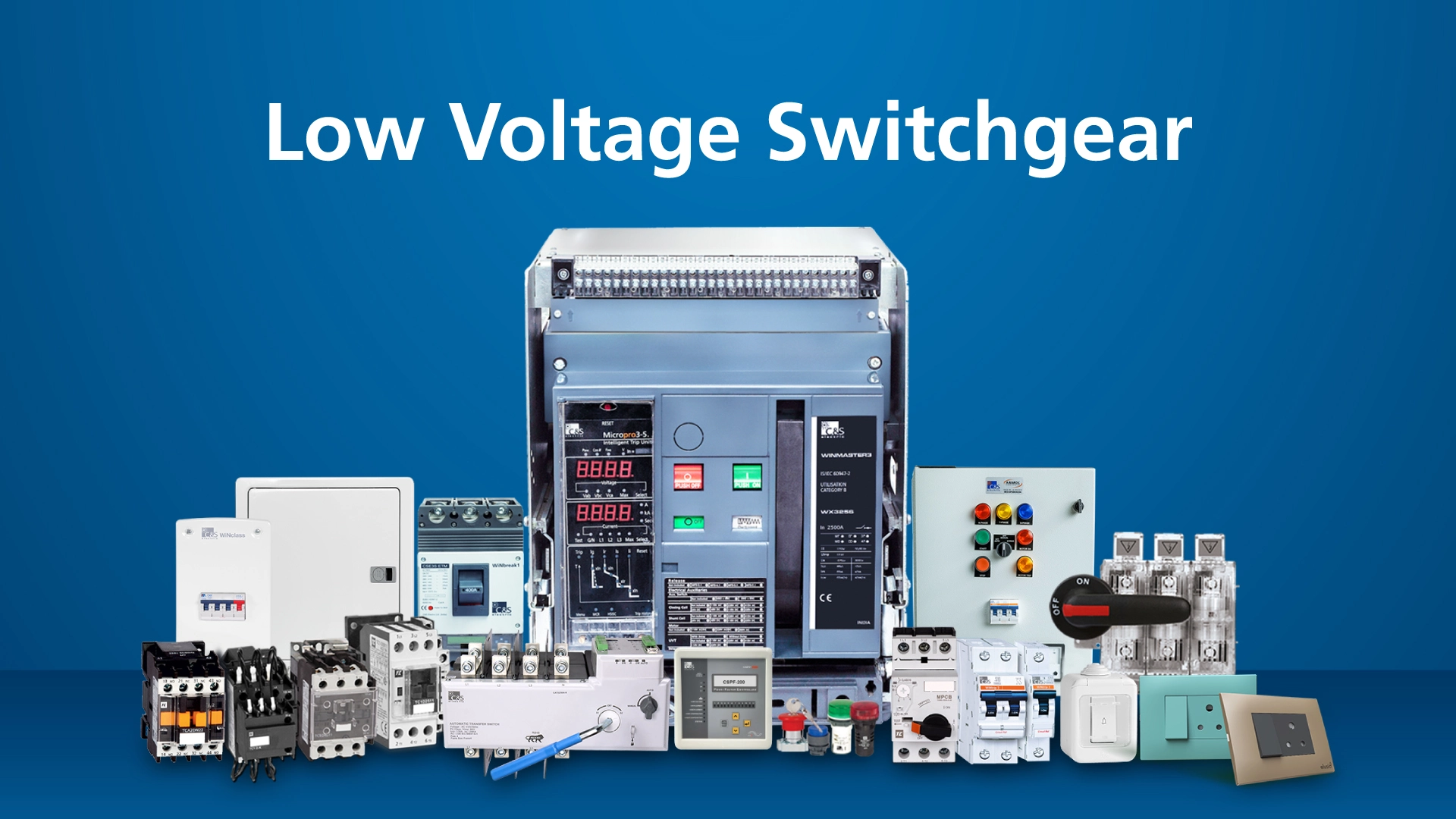
An arrangement of circuit breakers, fuses, or electrical disconnect switches known as low voltage switchgear is used to isolate, control, and safeguard electrical equipment. The main purpose of switchgear is to
- Provide protection against overcurrent, short circuit, and ground fault damage to electrical circuits.
- Regulate the electricity flow to allow for emergency and functional switching.
- To ensure safe maintenance and repairs, disconnect the equipment from the main power supply.
“Low voltage” systems are those that run at 1,000 volts AC (alternating current) or less. LV switchgear frequently has voltage ratings of 220V, 240V, 415V, 480V, and 600V.
Key Components of LV Switchgear
Main component used in a LV switchgear are listed below:
Component |
Function |
|---|---|
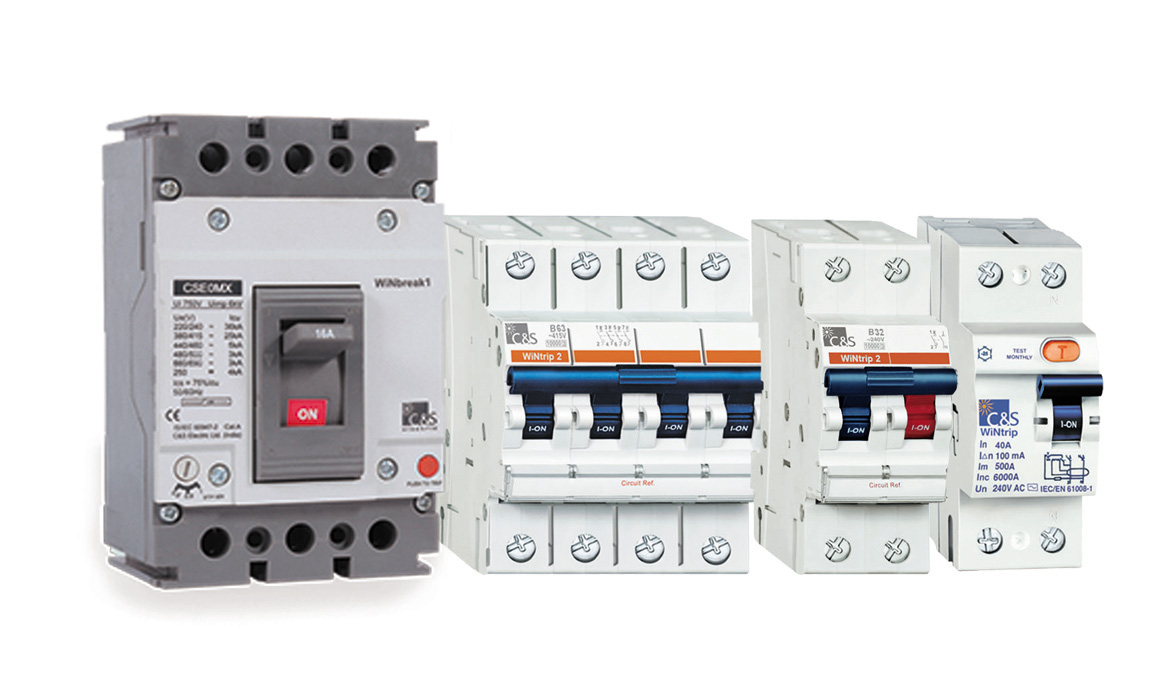
| Circuit Breakers | These are commonly used protective device. They automatically interrupt the electric current when a fault (like an overload or short circuit) is occurred in system. Example: Air Circuit Breakers (ACBs) and Moulded Case Circuit Breakers (MCCBs). |
| Busbars | These are thick strips of conductive material (copper or aluminium) these are the main path for electrical power distribution in switchgear. |
| Fuses | These are overcurrent protection devices that melt and open the circuit when the current exceeds a predetermined value. Also used for backup protection for smaller circuits. |
| Protective Relays | Relays are used to sense the fault in an electrical system and send a signal to the circuit breaker to trip and isolate the fault. |
| Switches/Isolators | These are used to disconnect the circuit from main supply so that the maintenance & repair work can be done safely. |
| Enclosure | These are metal cabinet that houses and protects all the components, ensuring compliance with safety standards (like IP ratings for dust/water ingress) and providing mechanical separation. |
Types of Low Voltage Switchgear Assemblies
The key factor that determines the footprint, safety features, and ease of maintenance of LV switchgear is its construction:
Fixed Type
Components (like circuit breakers) are permanently fixed in place in this design.
• Advantages: Small, economic, and easy to use.
• Drawbacks: While doing the maintenance or replacement, the entire system or a significant portion of it must be turned off.
Withdrawable Type
This type of breaker are most commonly used. Due to their mounting on trolleys or sliding mechanisms, the major parts—particularly the circuit breakers can be easily “withdrawn” from the compartment without cutting off electricity to neighbouring areas.
Where is LV Switchgear Used?
There is LV switchgear in practically all large structures:
- Data centres: guarantee that servers are always powered on.
- Hospitals: Ensures vital life support systems continue to function.
- Factories: Safely manages electricity for large motors and assembly processes.
- Big Office Buildings: Oversees lift, light and floor distribution.
Safeguarding Your LV Switchgear through Maintenance and Safety
When dealing with LV switchgear, electrical shock and arc flashes—strong electrical explosions—are the main risks. Minimising these significant risks is a major emphasis of modern switchgear design and operation practices.
Arc Flash Protection
A quick, hazardous burst of high energy, including heat, light, and pressure, brought on by an electrical fault is known as an arc flash or electrical blast. Below are the methods to reduce this arc:
Arc-Resistant Switchgear:
It is designed with unique venting and construction to safely divert the energy from an arc flash away from the operator while they are standing close by.
Zone Selective Interlocking (ZSI):
This is a smart coordination system. When a fault occurs, ZSI ensures that only the circuit breaker nearest to the fault will trips. This isolates the fault quickly and prevents unnecessary power loss
High-Speed Arc Quenching:
These systems use sensors to detect an arc flash in milliseconds. They instantly trigger a protective device that quenches the arc before it can fully erupt. It will reduce the damage and injury risk.
LV Switchgear keeps your lights on and your systems running safely by preventing electrical faults in the system. This essential component of electrical engineering powers the modern world.
Frequently Asked Questions
The main function of Low voltage switchgears is to protect, distribute, control, and isolate electrical power in a system including protection against overloads, short circuits, and other electrical faults, which protects equipment and the system from damage
It uses devices like low voltage Air circuit breakers, miniature circuit breakers (MCBs), moulded case circuit breakers (MCCBs), and fuses will detect and disconnect power during fault conditions like overloads and short circuits.
LV Switchgears are designed to for the electrical systems that have the voltages below 1000 volts(1Kv). LV switchgear frequently has voltage ratings of 220V, 240V, 415V, 480V, and 600V.
These are basically used in
- Residential and commercial buildings
- Industrial plants and factories
- Hospitals and data centers
- Water and wastewater treatment facilities