It is important that our electronic devices and connections work all the time. since everything uses electronics now a days so it’s important that those systems always work. From simple industrial machinery and critical data centre to everyday home appliances and sensitive electronic equipment, everything is in danger from a hidden threat that is transient overvoltage, known as electrical surges or spikes. A small even a microsecond-long fluctuation in voltage can lead to disaster, and can damage equipment, also leads to costly downtime, data loss, and even fire hazards. The essential defence against this hidden threat (Transient overvoltage) is the Surge Protection Device (SPD), a crucial electrical component in any modern electrical installation.
What is SPD?
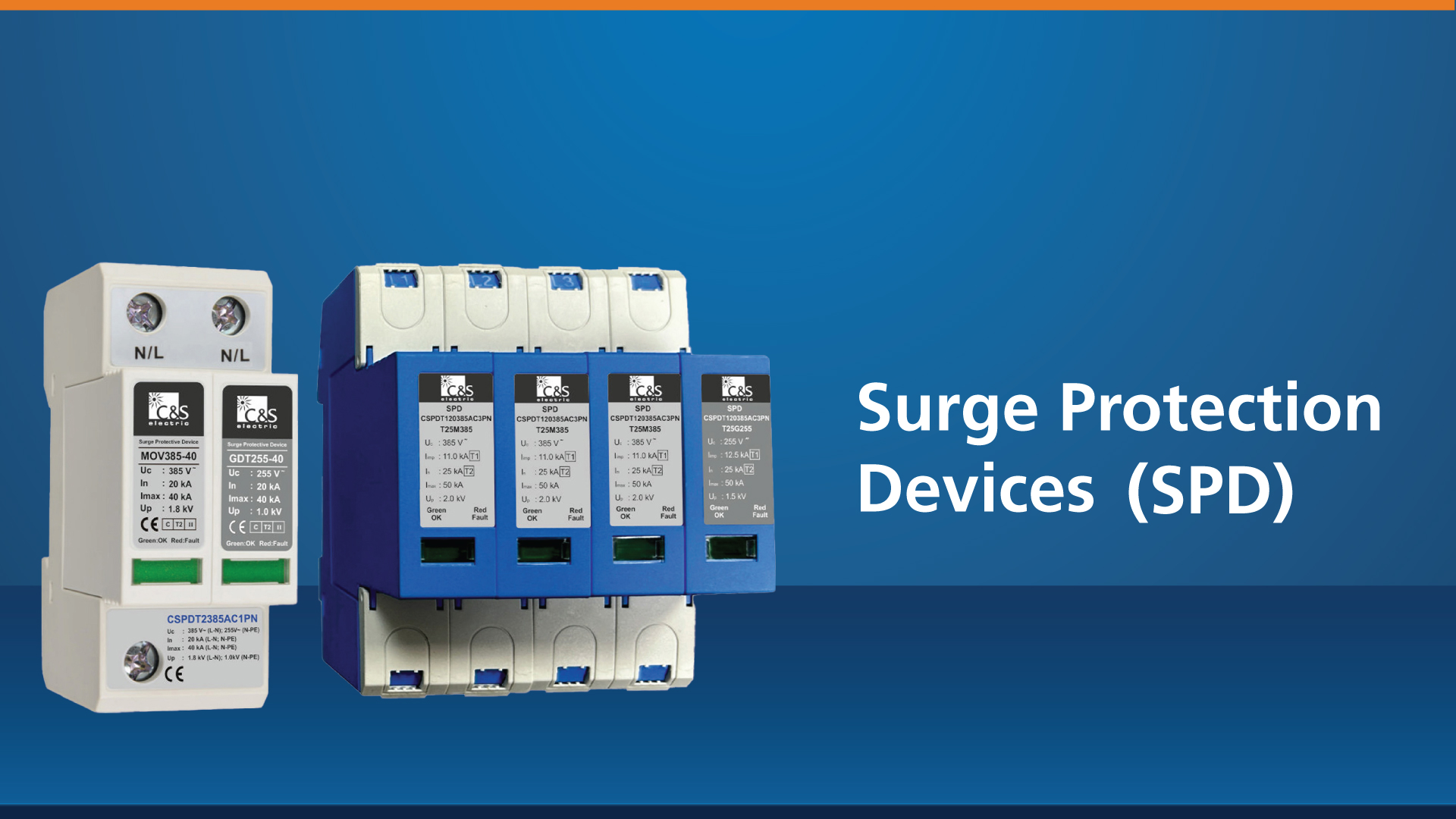
The Surge Protection Device (SPD) is a protective electrical equipment that is designed to limit transient overvoltage by diverting or redirecting surge current safely to the ground caused by lightning or switching operations in an electrical system. the SPD acts as a primary shield for all electrical LV systems. It is ensuring that the surge remains within a safe level.
Source of Surges: Understanding the real threat
Transient overvoltage are very sudden, high-magnitude spikes in voltage levels that last for a very short duration of time even for microseconds. it’s important to understand that a surge is not similar as long-term overload. While a standard circuit breaker protects our system from a sustained overvoltage or short circuit,where these transient surges are faster and need different protection equipment’s. These surges can, mainly caused by two primary sources:
- External Sources: The most dangerous surges are caused by lightning strikes. the direct strike, or even a lightning strike nearby to an overhead power system or telephone line, can induce a huge overvoltage that can travel through the connected conductors into buildings or electrical system.
- Internal Sources (Man-made): In most of the cases the transient overvoltage, and the surges occur due to the switching of electrical loads within a connected electrical system. For examples the turning on and off, of large inductive loads like motors, transformers, air conditioning units, heavy machinery, and speed-controlled appliances like washing machines or electric vehicle chargers.
Without an SPD, this excess energy travels through wiring or conductors through the connected electrical equipment. Now a days electronic components are miniaturized and operate on very low voltages, they have a low-energy tolerance, that makes them highly susceptible to damage from even very small level of surges. The damage can be immediate or cumulative (reduced lifespan and reliability).
How SPD Works?
The main function of an SPD is to act like an open circuit during normal operating condition and a short-circuit when a surge enters in an electrical system. This is achieved by using non-linear components that have the property to instantly change their electrical resistance based on the applied voltage.
The most used non-linear component in SPDs is the Metal Oxide Varistor (MOV).
- Normal Operation: Under normal system voltage, the MOV is in high impedance state, means it acts as an insulator, and no current flows through the SPD. The SPD is effectively “invisible” to the electrical system.
- Surge Event: When a transient overvoltage enters into the system, the voltage across the MOV immediately exceeds its pre-defined breakdown voltage. The MOV’s internal structure instantly changes, its resistance gets decreased dramatically to a low impedance state.
- The Diversion: This low-impedance path provides a route to the high-energy surge current to flow and redirecting it safely away from the load and shunting it to the system’s ground (earth) conductor.
- Clamping and Reset: The SPD effectively clamps the transient voltage to a safer level, known as the Voltage Protection Level. Once the surge event ends (in microseconds), the MOV’s impedance immediately gets back to its high-impedance state, and the SPD is ready to protect against the next surge event
Other components used in SPDs are Gas Discharge Tubes (GDTs), these components are used in combination with MOVs in hybrid designs to provide the strength. GDTs are used for very high surge current capacity.
Types and Classes of SPDs
International standards, primarily IEC/EN 61643-11, classify SPDs into three main types based on their installation location, surge handling capacity, and the type of surge they are designed to suppress. all three types of the electrical system, following the principle of Lightning Protection Zones (LPZ).
| SPD Type | Installation Location | Protection Function | Energy Handling Capacity |
|---|---|---|---|
| Type 1 | Main Service Entrance/Origin of Installation | Protects against direct lightning strikes and severe external surges. | High: – Handles largest surge currents (Iimp) |
| Type 1+2 | Main Service Entrance/Origin of Installation | Combined primary and secondary protection. Handles direct lightning and provides protection against switching surges. | High/Medium: – Excellent all-in-one solution for the main panel. |
| Type 2 | Sub-distribution Panels or Load Side of Main Panel | Protects against residual lightning energy and internally switching surges. | Medium: – Handles nominal discharge currents. |
| Type 2+3 | Sub-panels or Near Sensitive Equipment | Combined secondary and tertiary protection. Provides good protection against residual surges that is near to the load. | Medium/Low – Bridges the gap between panel and point-of-use protection. |
| Type 3 | Near or Within Sensitive Equipment | Protects sensitive loads from residual, lower-energy surges after upstream filtration. | Low – Provides final, localized protection. |
Type 1 SPDs: This type of SPDs are installed at the place where the risk of a direct lightning strike is very high, for example in buildings with an external Lightning Protection System (LPS). They must deal with the very high lightning energy.
Type 1+2 SPDs (Combined SPDs): These SPDs are designed for the energy handling capacity of a Type 1 device with the enhanced protection level typically associated with a Type 2 device. This is an efficient solution, that is used at the main distribution board, this one device is enough to handle large surges and sensitive enough to protect the downstream of equipment. Because it does both jobs, you don’t need to install a separate Type 2 SPD further down the line.
Type 2 SPDs: These SPDs are highly common in both commercial and residential applications, essential for protecting against most internal switching surges and residual surges that pass-through Type 1 device.
Type 2+3 Combined SPDs: These SPDs are designed to install near to the sensitive electrical or electronic equipment than a standard Type 2 device. They provide protection against medium-level surges and offer the great voltage clamping required for sensitive electronics. These type of SPDs are used in sub-panels feeding IT rooms or other critical loads.
Type 3 SPDs: These type of SPDs offer the fine level of protection, often found integrated into plug-in power strips or terminal device circuit boards to ensure the minimum possible residual voltage reaches the electronics.
Protecting Investment and Provides long life
Today, Equipment’s like air conditioners, smart home gadgets, servers, and factory controllers costs a lot of money to buy. They are a big financial investment. Surges can damage microprocessors, power supplies, and logic boards. An SPD increases the operational life of this equipment by protecting that equipment from continuous, low-level surges that cause cumulative damage, as well as from, high-level surges that cause instant failure.
Make System Reliable and Prevent Downtime
For commercial and industrial operations, downtime is a huge financial loss. A single surge event can stop the whole production, corrupt data, or disable essential services. SPDs ensure system continuity by preventing sudden spikes, safeguarding infrastructure, data centre, and safety systems.
Meeting Regulatory Requirements
These days, the modern electrical wiring regulations in many countries increasingly mandate the installation of surge protection for almost everywhere, because the sudden power spike can destroy the whole system and cause serious trouble.
- Serious injury or loss of human life.
- Failure of a safety service.
- Financial or data loss.
Selection and Installation Guidelines
- Selecting and installing the correct SPD is important for its effectiveness. A poorly installed SPD can be ineffective or even leads to a hazard
Key Selection Parameters
- Maximum Continuous Operating Voltage (Uc): The maximum voltage the SPD can withstand continuously without being damaged or conducting
- Voltage Protection Level (Up): The maximum voltage that the SPD will allow to pass through to the protected equipment during a surge event
- Nominal Discharge Current (In): The peak current the SPD can withstand multiple times without being damaged. this is a key measure of the device’s robustness
- Impulse Current (Iimp): The maximum surge current the SPD can handle once without being damaged
Installation Practices
- Coordinate Protection: By implement a cascaded system (e.g., Type 1 at the main panel, Type 2 at sub-panels, Type 3 at the point-of-use) to ensure the multi-level protection
- Minimize Connection Lengths: This is the most important rule. The conductors connecting the SPD to the electrical system and to the earth terminal must be as short and straight as possible. Excessive length can lead to inductance, which can negate the SPD’s clamping effect by increasing the residual voltage. Wire lengths should ideally not exceed 0.5 meters
- Proper Grounding: A perfect ground connection is essential for the SPD to safely divert the surge current. The complete grounding system must be compliant with electrical codes.
- Consider All Lines: Protection should not be limited to the main power lines. Surges can enter in system by any conductive path, including telephone lines, data cables (Ethernet), CCTV, and antenna cables. Dedicated SPDs for these signal lines should be installed where they enter the building.
Conclusion
The Surge Protector is the real hero that keeps your electrical system safe and your equipment running longer. Today, even basic tools use small, delicate electronic parts, and the SPD offers a quick, silent defence against powerful, damaging power surges. If people know about the different types, how they work, and how to choose and install them correctly, they can get strong protection, save their money, and keep all their important electrical systems working without any interruption.
Frequently Asked Questions
SPD (Surge Protection Device) is an electrical device that acts like primary shield, it is designed to safeguard electrical systems and electronic equipment from transient overvoltage or electrical surges. Its main function is to limit transient overvoltage by diverting or redirecting surge current safely to the ground caused by lightning or switching operations in an electrical system.
The commonly used component in SPDs is the Metal Oxide Varistor (MOV).
Working of MOV:
- MOV Have high resistance during normal voltage (acting as an insulator).
- When surges enter into the system, it Instantly and dramatically decreasing its resistance when the voltage exceeds its defined breakdown voltage and acts like a conductor to divert the surge.
- At last, when the surge event ends, MOV Immediately reverts to high resistance state.
Some SPDs also use Gas Discharge Tubes (GDTs), in hybrid designs, for handling very high surge current capacity.
1. Type 1 SPD
- Description: These are the primary line of defence, designed to handle the highest energy surges, like direct lightning strikes. They are tested with a very high energy impulse current waveform.
- Installation Location: Service entrance, before the main disconnect.
2. Type 2 SPD
- Description: These type of SPDs are designed to handle the surges caused by indirect lightning strikes (induced surges) and switching operations within the power grid or the facility. They are tested with a nominal discharge current waveform
- Installation Location: Distribution boards/panel, boards
3. Type 3 SPD
- Description: These provide the final and end-level protection. They have the lowest discharge capacity and provide protection against low-level, surges.
- Installation Location: Device outlets, terminal equipment connection points
4. Type 1 + 2 SPD
- Description: A single device that meets the technical parameter of both Type 1 and Type 2 SPDs. It offers complete service entrance protection against direct strikes and switching surges.
- Installation Location: Distribution boards/panel, boards
5. Type 2 + 3 SPD
- Description: A single device that combines the capability of the Type 2 protector with the very low voltage protection level of a Type 3 SPDs.
- Installation Location: panel, boards Device outlets, terminal equipment connection points
No. the SPD is designed to handle very short transient overvoltage’s (microseconds). A Temporary Overvoltage is a sustained overvoltage that lasts for a long time as compared to transient overvoltage. Temporary Overvoltage can permanently damage an SPD and are typically handled by other protective devices, as standard SPDs are not built to withstand continuous high voltage