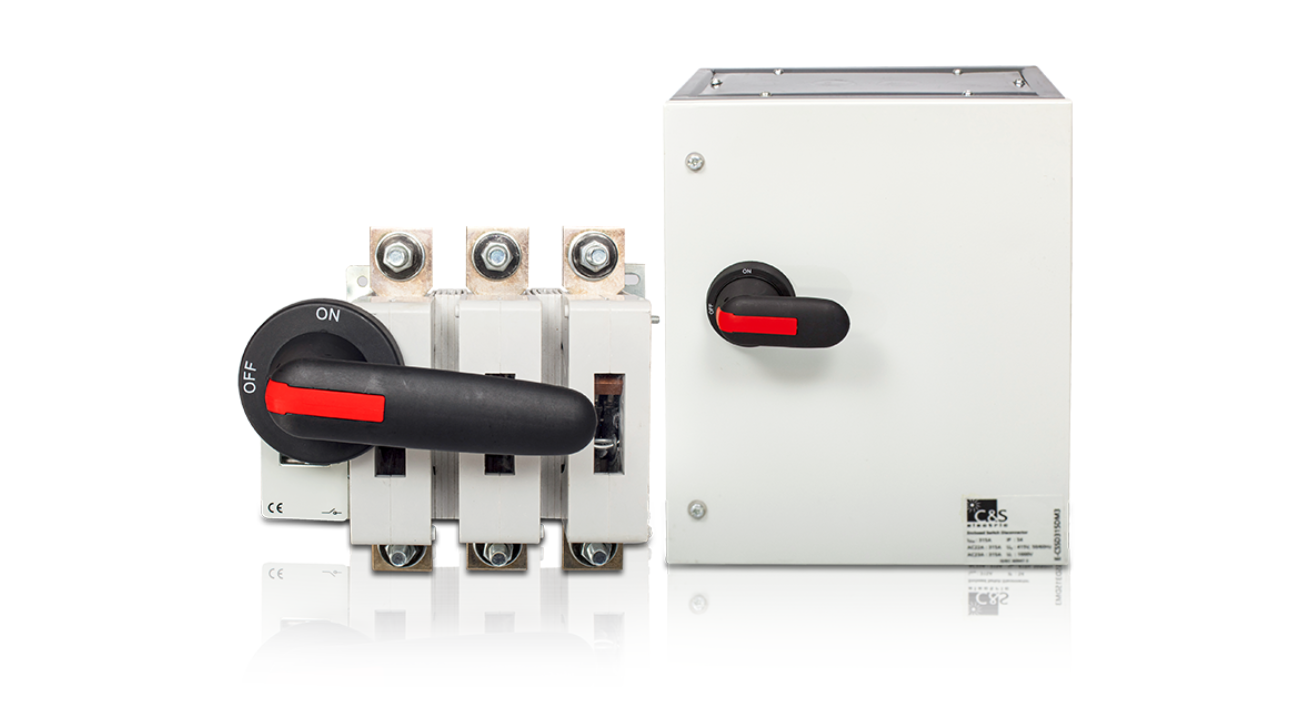
It is an electrical switching device which is used to make or break the circuit also isolate the electric circuit from the main power source. Imagine a big, powerful machine in a factory. To do maintenance, you need to make sure the electricity is completely off. A regular light switch is not enough. You need something that makes it impossible for the power to turn back on.
That’s where a switch-disconnector comes in.
It does two things at once:
- It switches the power off. Like a normal switch, it can switch on & off the electrical circuit
- It disconnects the power. When you turn it off, it creates a visible gap in the electrical path due to which electricity can’t flow in circuit. This is what makes it so safe.
This visible gap is the key to safety. It’s like putting a padlock on a gate to make sure no one can get in.
How Does It Work?
It’s very simple. Inside the device, there are metal parts called contacts.
- When the switch is “ON,” the contacts are touching, and electricity can flow.
- When the switch is “OFF,” a handle or lever moves the contacts apart, creating that air gap.
This air gap is what provides the safe isolation for workers to do their job without the risk of an electric shock.
Where Do You Find Them?
Switch-disconnectors are everywhere you need to safely work on electrical equipment.
- In factories: To turn off power to a machine before maintenance.
- Rooftop solar panels: To turn off the power from the DC side of a system before doing maintenance.
- In buildings: To isolate a specific part of the electrical circuit for maintenance.
- HVAC Systems: Used to isolate the outdoor unit of an air conditioner or heat pump for service.
What’s the Difference Between a Switch-Disconnector and a Circuit Breaker?
- A Circuit Breaker is works like a security guard. Its job is to automatically trip the circuit if fault occurs like a short circuit or an overload. It protects electrical equipment from damage.
- A Switch-Disconnector is used to opened or closed an electrical circuit on purpose by a person to completely isolate the power for safety & maintenance.
Circuit breaker & Switch disconnector works together. You would first turn off the power with the circuit breaker, and then use the switch-disconnector to make sure the circuit is fully and safely isolated.
Advantages:
- Enhance Safety: The visible gap gives you peace of mind that the power is truly off.
- Easy to Use: They are easy to operate, usually with a clear handle or lever.
- Reliable: They are built tough and can handle frequent use.
- Compact Design: Two functions switching and disconnecting into one device makes it compact.
Disadvantages:
- Manual Operated Only: Most of them have to be operated manually by a person. They can’t be operated remotely.
- Can’t Protect the system: They aren’t designed to stop a fault, that’s is done by circuit breaker.
Conclusion
In simple terms, a switch-disconnector is a safety tool in any electrical system. Its job is to make sure that when you want the power off & on. It plays a vital role in protecting personnel and equipment during maintenance and repair.
Frequently Asked Questions
Switch-disconnectors are widely used in various applications to ensure safety to do the repair or maintenance. Some common applications are
- Industrial Machinery: Used to isolate power to a machine before maintenance.
- Motor Control Centre (MCCs): Installed as the main incoming isolation device for individual motor feeders.
- Solar Power Systems: Required for isolating the DC side of a system for maintenance.
- Distribution Boards: Installed as the main switch to isolate the entire board from the incoming supply.
Switch disconnector helps in isolating the circuit from main power source so that technician can do repair or maintenance work safely.
It is basically an electrical device which is used to de-energize the electrical circuit from main power source for doing service and maintenance work safely.
It’s very simple. Inside the device, there are metal parts called contacts.
- When the switch is ON the contacts are touching, and electricity can flow.
- When the switch is OFF a handle or lever moves the contacts apart, creating that air gap.
An isolator and a switch disconnector is same thing and their function are same. It is a same product with two different names.